
The car
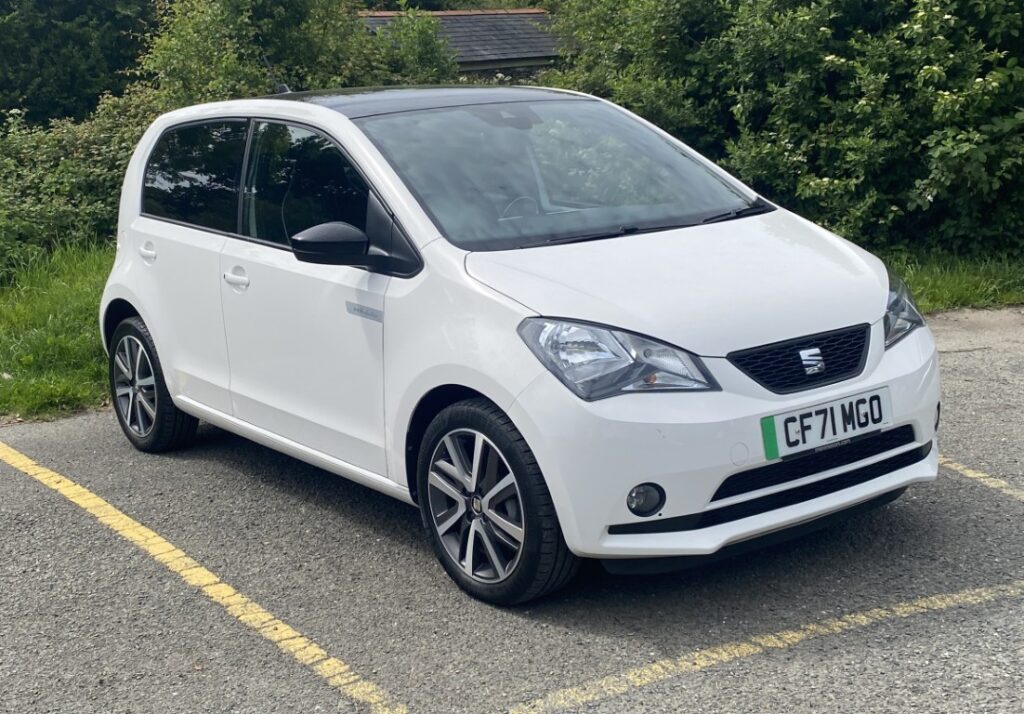
We drive a 2021 Seat Mii Electric — 37 kWh battery (32 kWh usable), 161 miles WLTP range (actually delivering 180 miles range in summer) bought as a low-mileage used car (10,486 miles) through Drive Green, a specialist EV dealer near Radstock, Somerset. It cost £10,200 and was delivered to us in Devon in May 2026.
Drive Green supplied a full battery health report with the car showing 95/100 health at purchase — in practice it’s shown a range of up to 164 miles at 97% charge, so if anything it’s outperforming the figures on paper.
Why a Seat Mii
For a household that mostly does local and modest-distance driving, we didn’t need — or want to pay for — a big-battery, long-range EV. We compared a Renault Zoe (similar footprint to our old Hyundai i10, which we liked) and a Hyundai Kona (better range and ride height, recommended by a friend) before landing on the Mii: small, easy to park and drive on Devon’s lanes, and priced to match how little energy it actually costs us to run.
We’d originally lined up a different used EV from another dealer, but pulled out after their own battery health report came back at only 70% following a repair — it took the shine off our confidence in that car and that dealer. Drive Green’s battery health reporting was clear, thorough, and gave us the confidence to go ahead with the Mii instead.
Real-world efficiency
Since taking delivery we’ve been tracking consumption closely:
- ~6 miles/kWh in mixed driving
- ~5.7 miles/kWh on a longer run
That’s excellent for any EV, small-city-car efficiency territory. Combined with our solar export running at more than four times our import, the car has been, in practical terms, free to fuel.
Solar vs Fossil Fuels
It’s a genuinely different way of thinking about “fuel”: with a petrol or diesel car.
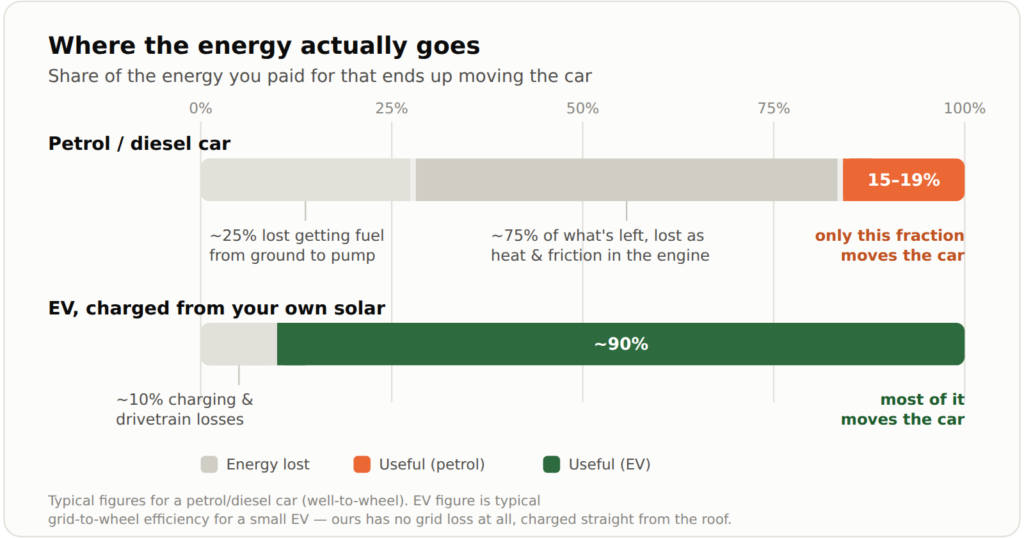
Roughly a quarter of the energy in contained in extracted crude oil is lost just getting it from the ground to the pump in refining into usable petrol or diesel, and transporting it to the pump.
Of what’s left, around three-quarters is lost again as heat and friction in the engine.
So only 14–18% of the petrol/diesel energy you buy actually moves the car.
At the other end of the scale, charging an EV from your own solar panels skips almost all of that loss.
The charger
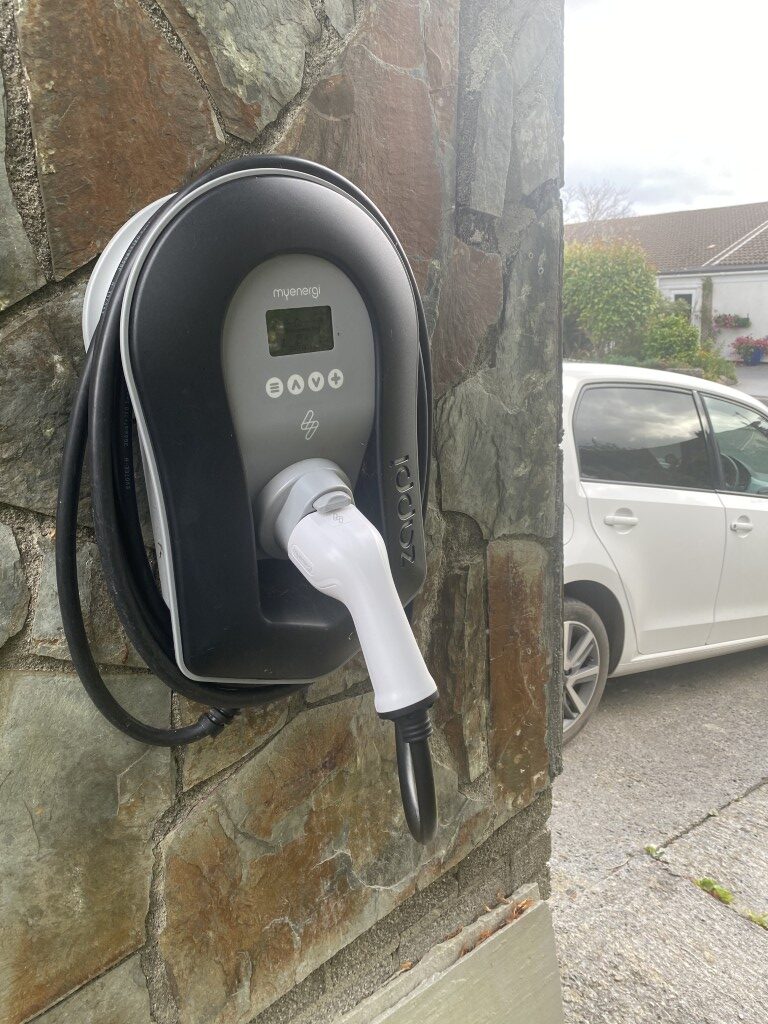
Charging is via a 7 kW myenergi Zappi charger, installed by Bloom Renewables — as an extension of the solar installation, fitted VAT-free about a month or two after the panels went in. The Zappi can prioritise solar surplus, cheap overnight electricity, or a blend of both, so the car charges almost entirely from power we’re either generating ourselves or buying at the lowest rate available.
Drive Green
Drive Green were thorough, honest, and easy to deal with.
- Website: drive-green.co.uk
- Phone: 01761 233558 (sales) / 01761 603167